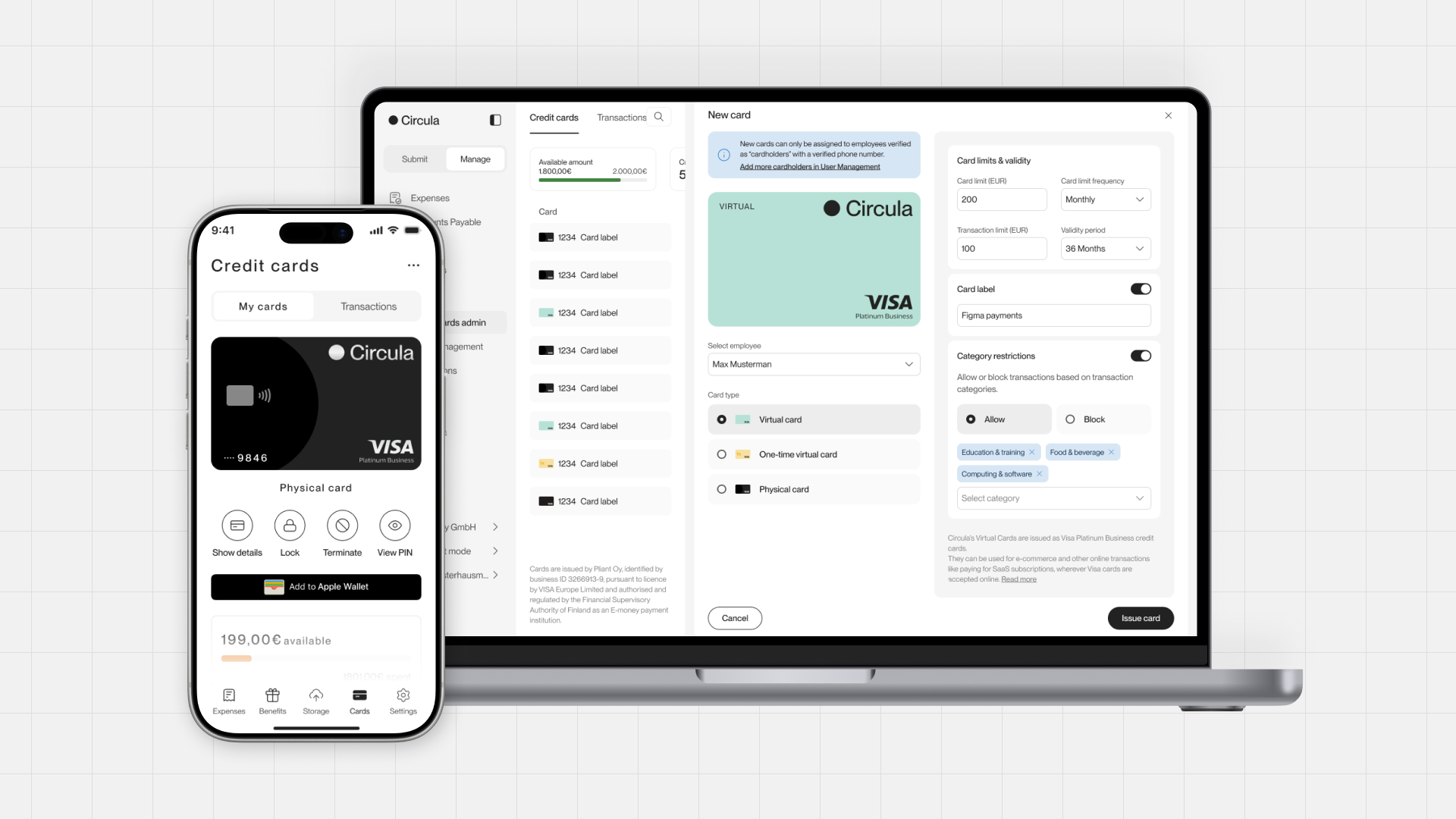
Evolving Credit Cards
From Feature Gaps to Product Maturity
The situation
When I joined Circula in May 2024, the Credit Cards product was recently published and still suffering from some early-release issues.
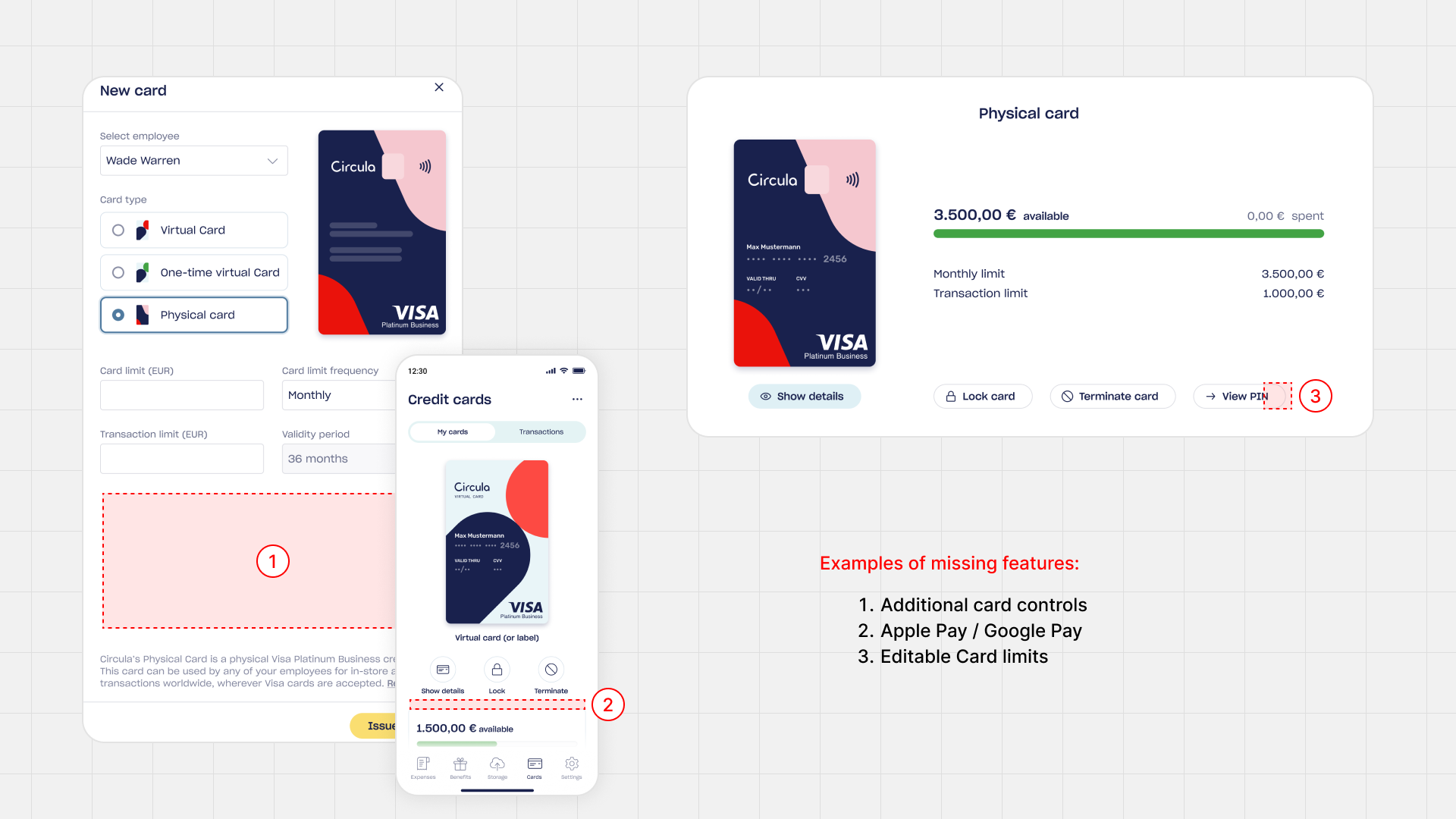
Compared to established competitors, the product lacked essential capabilities such as Apple Pay and Google Pay. At the same time, delayed expense submissions created additional administrative work for finance teams, while parts of the onboarding experience caused critical failures that required urgent Engineering intervention.
As the Product Designer responsible for Credit Cards across Web, iOS, and Android, I worked closely with Product and Engineering to address these challenges, expand the product's capabilities, and improve the experience for both cardholders and admins.
The broader goal was to evolve Credit Cards from a relatively limited offering into a more mature, reliable, and competitive product.
My approach
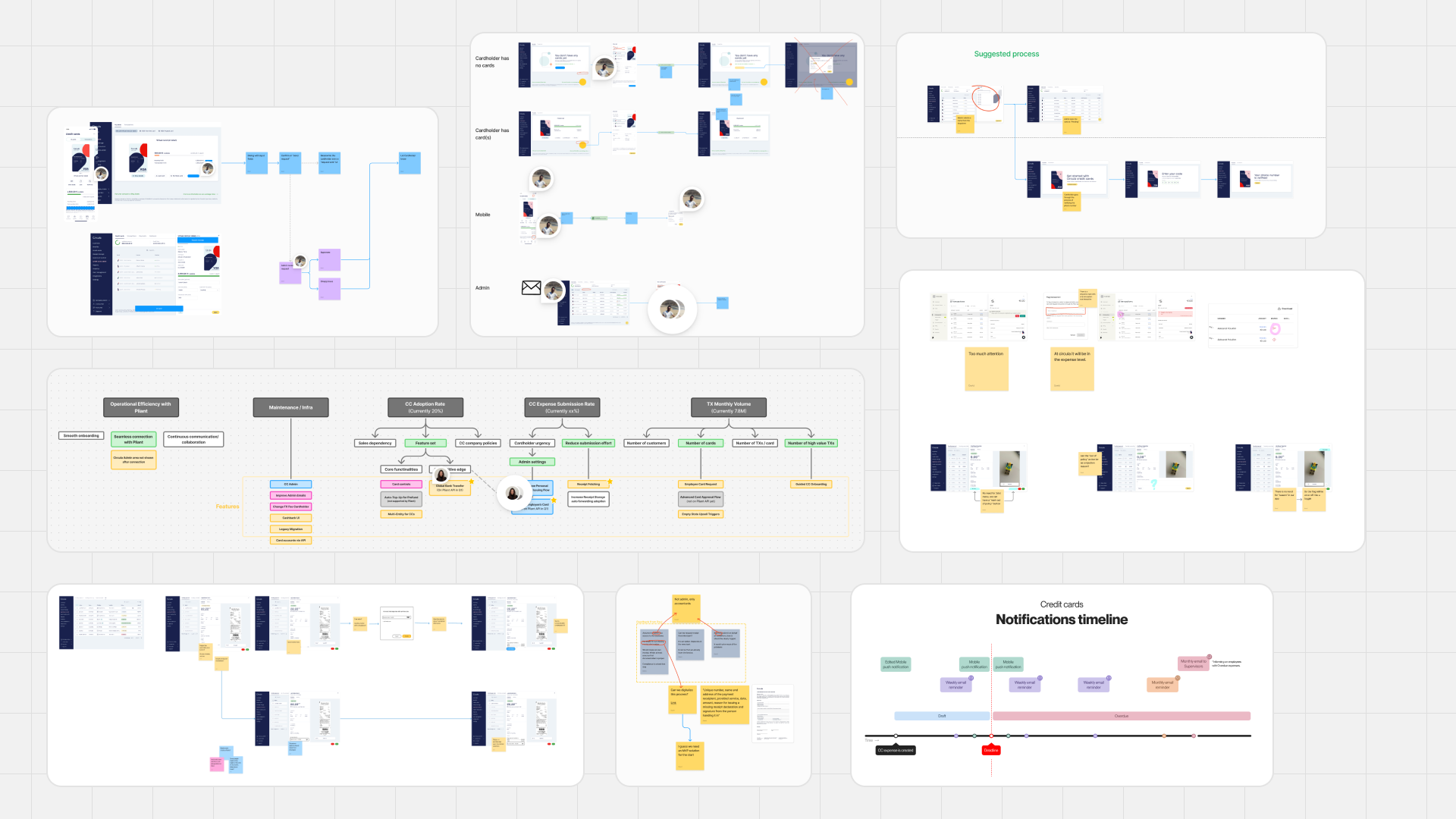
As the Product Designer responsible for the Credit Cards product, I owned the end-to-end design experience across Web, iOS, and Android, working closely with Product Managers, Engineers, internal and external stakeholders.
My responsibilities extended beyond individual features: I identified product opportunities, conducted customer research, explored and advocated for solutions, and navigated technical and business constraints.
My approach focused on three principles:
Understand the underlying problem: Combine customer feedback, research, and product data to identify opportunities and prioritize meaningful improvements.
Balance ambition with feasibility: Collaborate closely with Engineering to understand technical limitations, evaluate trade-offs, and develop solutions that could realistically be delivered.
Think beyond individual features: Consider how each improvement contributed to the broader Credit Cards experience, product consistency, and long-term business objectives.
Throughout this work, I remained hands-on, from early explorations and prototypes to detailed interaction design, implementation support, and quality assurance.
The challenge & goals
The challenge was to evolve Credit Cards into a more competitive and reliable product while continuing to support its growing customer base.
The focus was on three priorities:
Close competitive gaps: Introduce essential payment capabilities like Apple Pay and Google Pay and improve existing card management experiences for admins.
Reduce friction and operational overhead: Simplify complex workflows, improve onboarding reliability, and reduce the need for Engineering intervention.
Increase product adoption: Make Credit Cards a more attractive and trusted payment option for existing customers, encouraging greater usage and a higher share of company spending.
Rather than redesigning the entire product, the approach for these challenges was incremental, prioritizing improvements based on regulations, partner and customer needs, business objectives, and technical feasibility.
Understanding our users
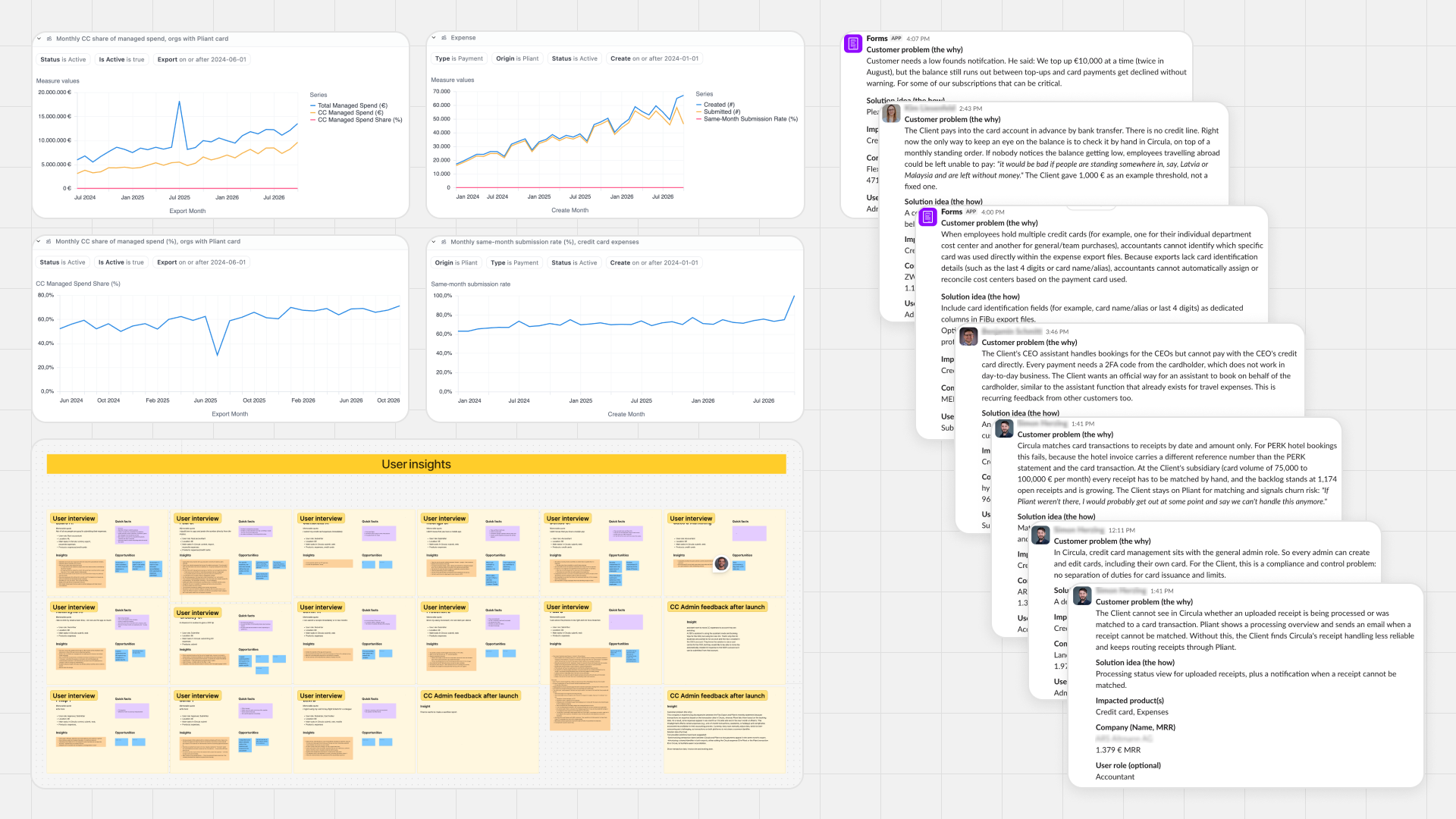
Throughout the evolution of Credit Cards, I regularly engaged with accountants, finance professionals, and cardholders to understand their workflows and identify opportunities for improvement.
One recurring observation stood out: positive feedback didn't necessarily mean a good experience.
Accounting professionals sometimes described existing workflows positively because they were used to even more complicated ones. Friction often became apparent only when I asked detailed questions or observed how they performed their daily tasks.
An interesting example of this behavior came up during a company-wide demonstration by our Finance team. Watching them reconcile Credit Card expenses exposed a cumbersome, time-consuming workflow that hadn't previously emerged as a significant pain point in our conversations.
This experience reinforced an important lesson: users don't always recognize or articulate the friction they've learned to work around. Understanding their actual behavior was often more revealing than asking whether they were satisfied with a feature.
These conversations reinforced the importance of looking beyond stated satisfaction. By understanding what users actually did, rather than relying solely on what they said, we could identify friction they didn't always recognize as a problem.
Evolving the product
Improving Credit Cards required a series of initiatives addressing different aspects of the experience, from everyday payments to administrative workflows and technical reliability.
As the product evolved, my work focused on three main areas:
1. Expanding payment capabilities
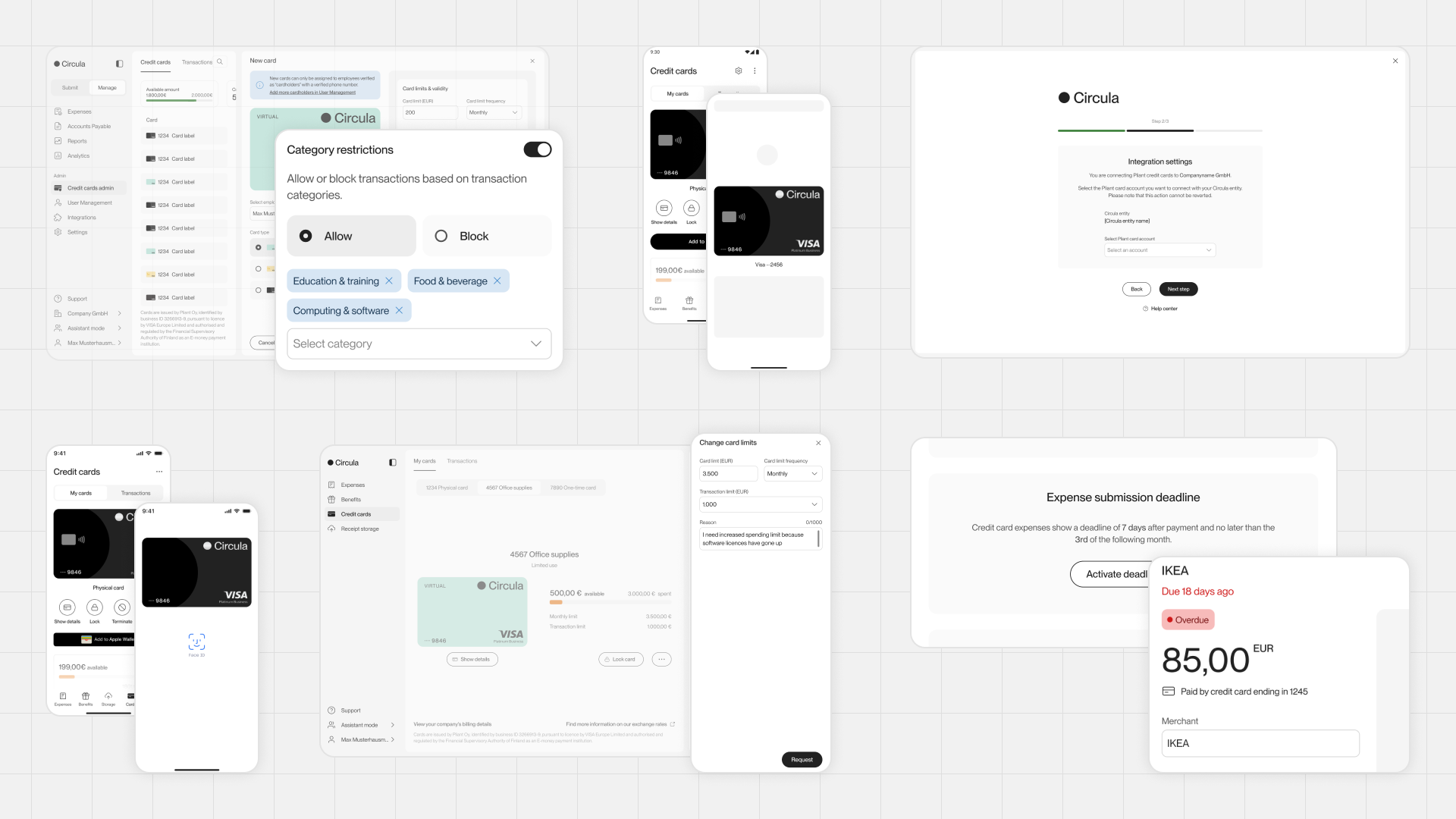
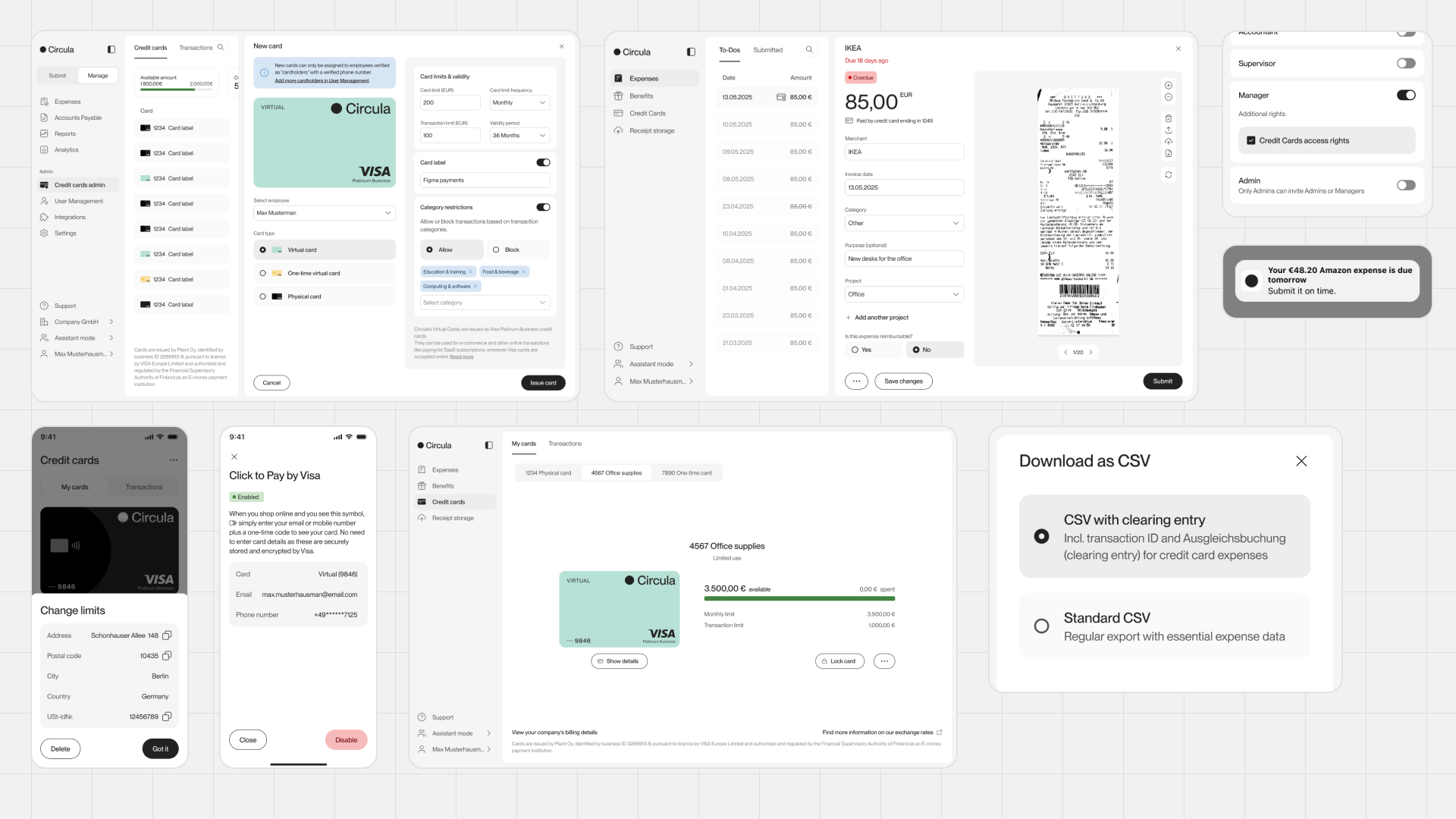
Closing competitive gaps was an important priority. I designed Visa Click to Pay, card limit requests, and a new generation of physical and digital card designs. I also supported the introduction of Apple Pay and Google Pay, helping make Credit Cards a more complete payment solution.
2. Giving administrators greater control
Managing company spend required more flexibility and control. I designed card controls that allowed administrators to manage spending restrictions, while also improving how card information and management actions were organized. Other initiatives, including expense submission deadlines and CSV exports, helped improve the broader expense management experience.
3. Simplifying complex workflows
Some of the biggest opportunities existed beyond the payment experience itself. I redesigned the Pliant onboarding flow to address customer friction and critical failures that required urgent Engineering intervention.
Each initiative addressed a different problem, but together they contributed to making Credit Cards more capable, reliable, and easier to manage.
Work example: Card controls
Card Controls was an important step toward making Credit Cards a complete offering. Bringing the functionality to parity with Pliant, our card provider, was essential for customers considering migrating their card management entirely to Circula.
I designed a modular solution that could accommodate different types of spending restrictions without requiring a redesign whenever new controls were introduced.
Although adoption was slower than expected, Card Controls addressed a critical functionality gap and removed a potential deal-breaker for customers considering the full Circula offering.
Work example: Customer onboarding flow
The original onboarding flow had been implemented under time pressure, overlooking common user mistakes and important edge cases. As a result, customers frequently encountered critical errors that required urgent intervention from Customer Support and Engineering.
With close collaboration with Product and Engineering, I redesigned the experience to prevent errors before they occurred and help users recover independently when something went wrong. The new flow accommodates complex corporate structures, provides clear visual guidance, and includes recovery paths for different failure scenarios.
The redesign eliminated onboarding-related support tickets, improving the customer experience while freeing Engineering and Customer Support from recurring interventions.
Results & impact
Over two years, Credit Cards evolved into a more competitive and mature product, closing critical functionality gaps, improving reliability, and supporting growing customer adoption.
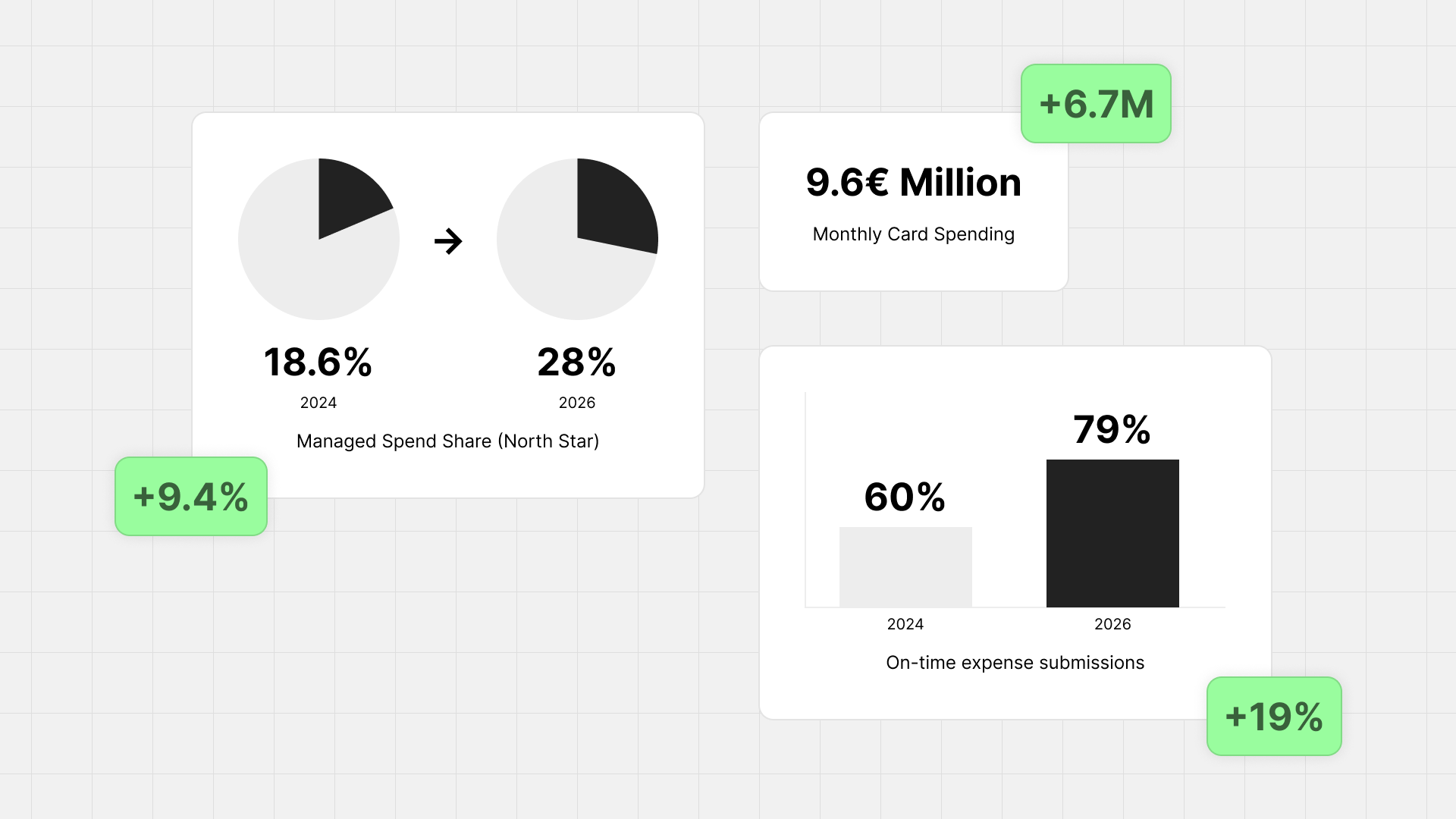
18.6% → 28% Managed Spend Share
The share of Circula-managed spending paid with Circula cards increased by approximately 9.4 percentage points.
€9.6M monthly card spending
Monthly transaction volume reached approximately €9.6 million from €2.9 million in May 2024, reflecting the growing scale of Credit Cards.
60% → 79% on-time expense submissions
Introducing an escalating system of deadlines and notifications contributed to more timely submissions, reducing friction for cardholders and finance teams.
Beyond these metrics, the onboarding redesign eliminated related support tickets, while Card Controls removed an important barrier for customers considering migrating their card management to Circula.
Looking back
Evolving Credit Cards taught me that product maturity isn't simply about adding more features. It's about understanding which problems matter most, addressing the complexity behind seemingly simple workflows, and making improvements that work together as a coherent experience.
One of my biggest takeaways was the importance of looking beyond what customers explicitly request. Observing their daily work often revealed opportunities that wouldn't have surfaced through feedback alone.
I also learned to consider the broader impact of design decisions. A better experience doesn't just benefit customers; it can reduce operational overhead, support business growth, and create a more sustainable product for the teams building and maintaining it.
I'm particularly proud to have contributed to a user experience that became a recognized competitive advantage, with UX consistently mentioned among the reasons for winning deals in Sales reports.